Struggling to Choose a Wedding Venue in Bali? Here Are 10 Ways to Find the Right One
July 23, 2026
Chapel Wedding in Bali: Locations, Prices, and Everything You Need to Know
July 26, 2026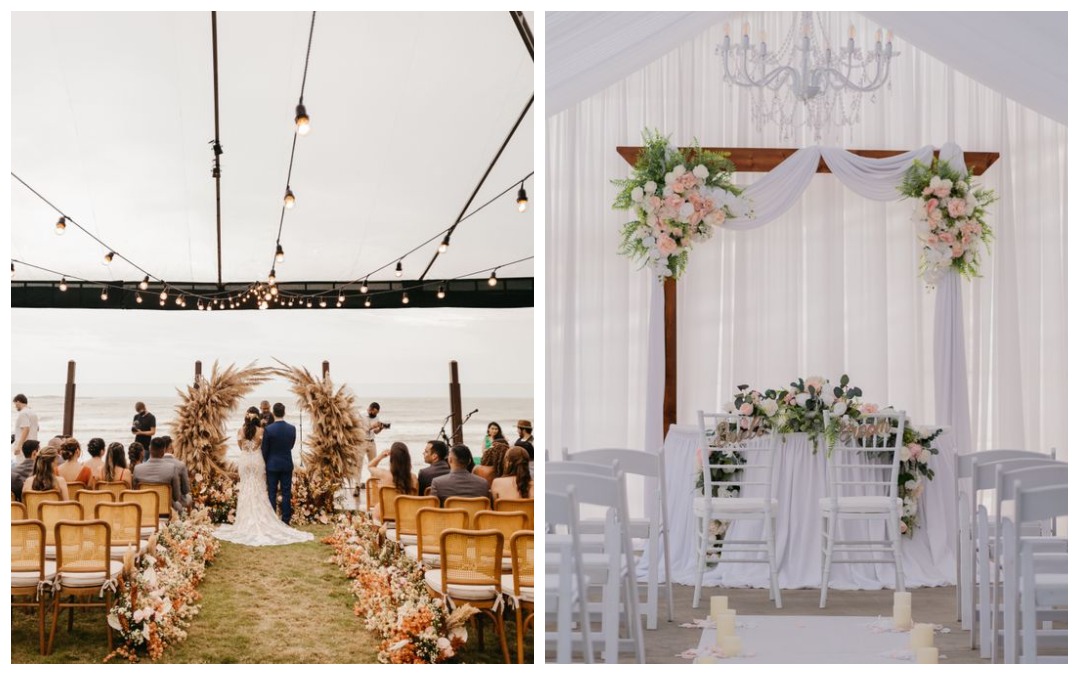

The destination is settled, the date is confirmed, but one question remains: outdoor or indoor?
This is one of the most common dilemmas for couples planning a wedding in Bali, and there is no single right answer for everyone.
Outdoor offers authentic natural beauty but brings weather risk. Indoor delivers more controlled comfort, but a different kind of atmosphere.
This article compares both options honestly, factor by factor, so that the decision you make is grounded not just in visual preference but in the real conditions of your wedding.
What Is the Difference Between an Outdoor and Indoor Wedding Venue in Bali?
Outdoor Wedding Venues
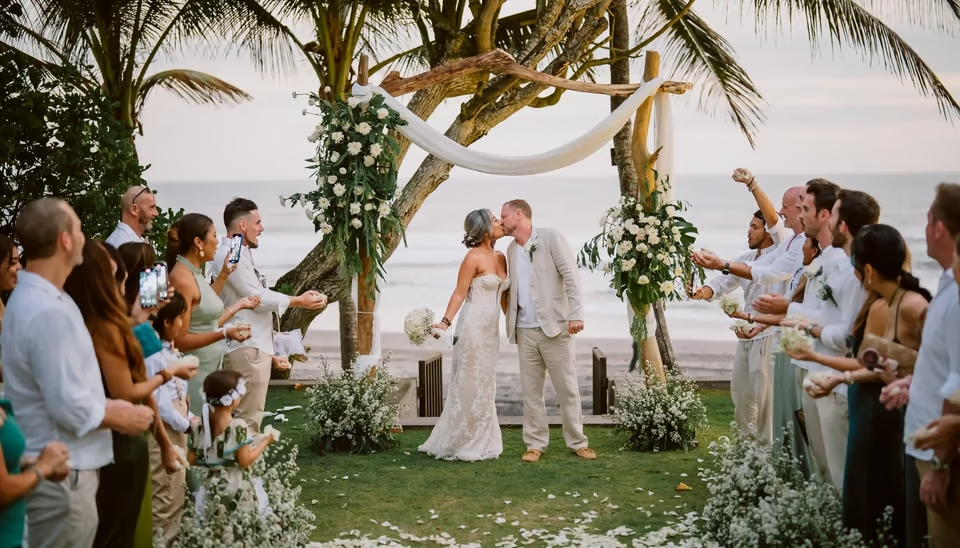
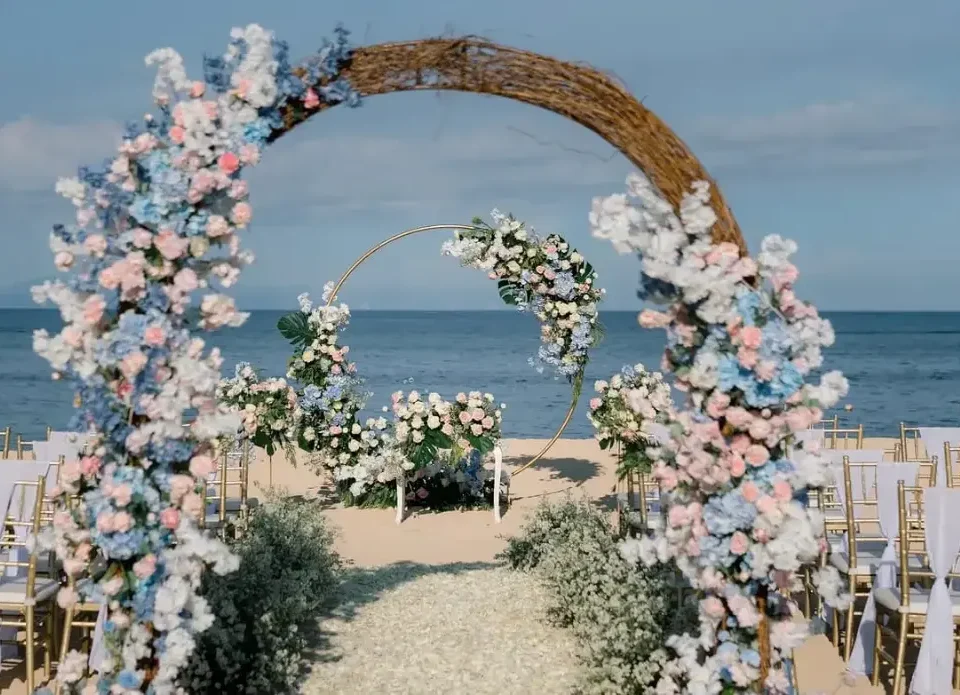
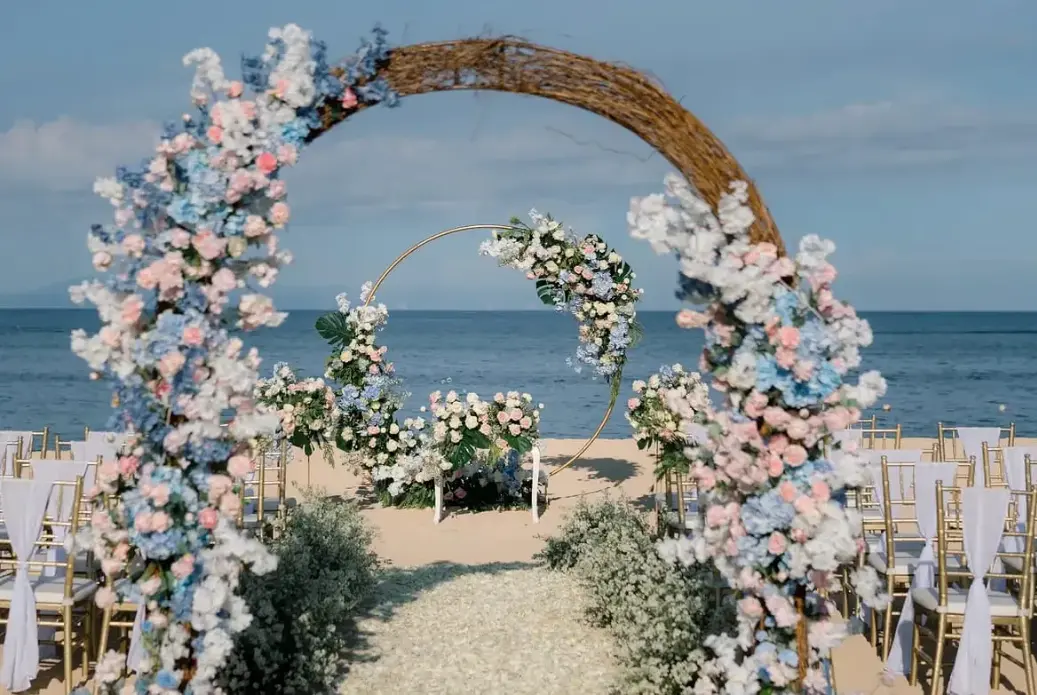
Outdoor venues in Bali offer natural beauty as the primary element of the event. This could be a private villa garden with a pool and tropical trees, the clifftops of Uluwatu overlooking the Indian Ocean, terraced rice fields in Ubud surrounded by the sounds of nature, or directly on the beach with white sand and the sound of waves.
What makes outdoor weddings in Bali so appealing is their ability to create an atmosphere that no artificial decoration can replicate. When the sun sets behind a couple at the edge of Seminyak beach, no constructed backdrop can rival that moment.
But outdoor also means complete dependence on natural conditions. Weather in Bali can shift, particularly during transitional periods. Unexpected wind can disturb decorations. The heat of midday during the dry season can make guests uncomfortable.
Indoor Wedding Venues
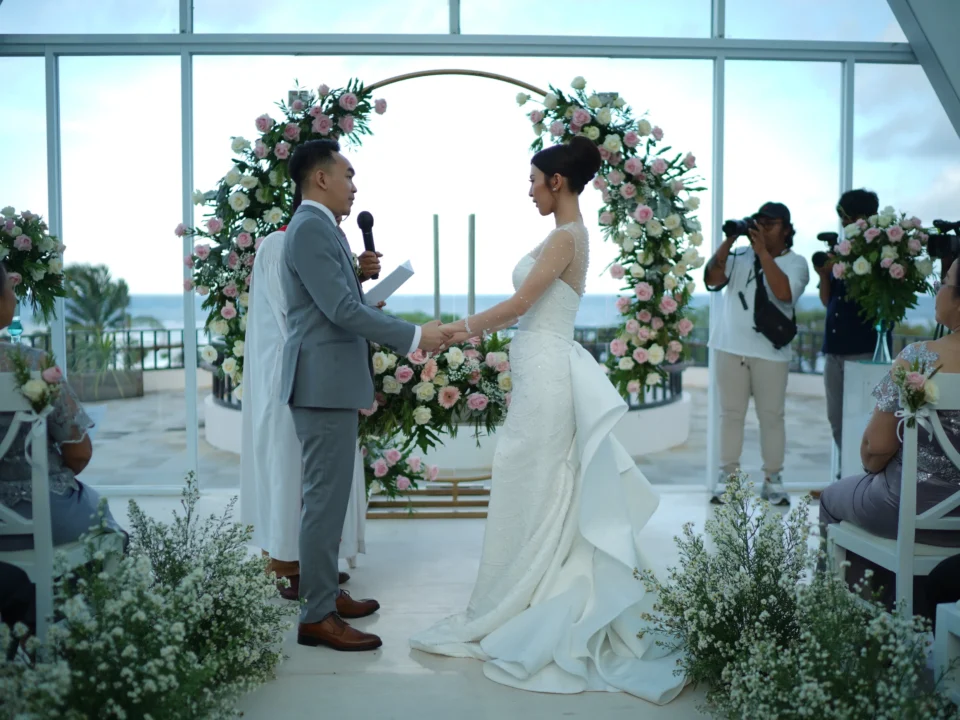
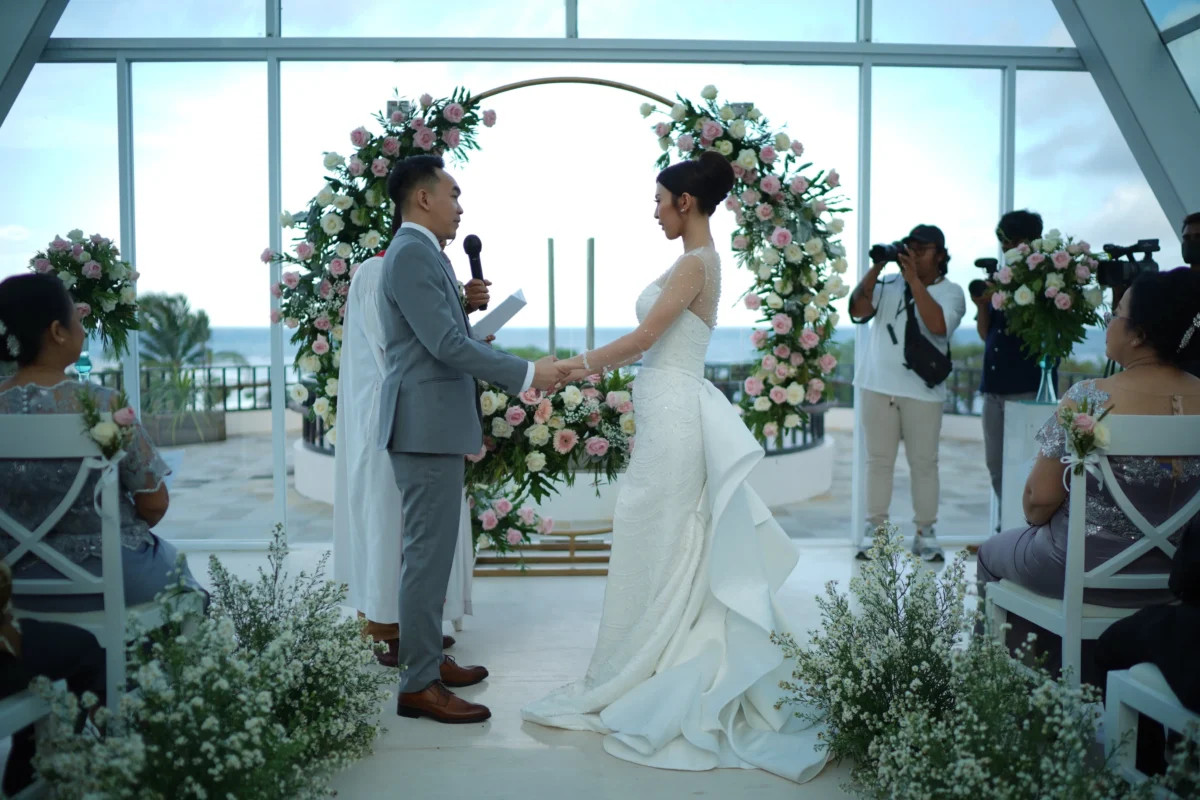
Indoor venues in Bali come in many forms: a five-star hotel ballroom in Nusa Dua, an architecturally striking chapel in various locations, or a resort event space specifically designed for weddings.
The primary advantage of indoor is consistency. Temperature is controlled, lighting can be adjusted precisely, and the event schedule is never threatened by sudden rain. For older guests, guests with limited mobility, or very large and formal weddings, indoor is often the far more practical choice.
On the other side, indoor requires a larger investment in decoration to create a genuinely memorable atmosphere. Without a natural backdrop, the visual quality of the wedding depends entirely on the decor design you choose. This is not a weakness, but an implication worth factoring into your budget and concept planning.
Which Is More Popular for Weddings in Bali?
Outdoor weddings are significantly more popular in Bali than indoor weddings, which is understandable given that the natural beauty of the island is one of the main reasons couples choose it in the first place. Getting married inside a building in Bali can feel like missing the island’s greatest offering.
That said, this trend does not mean outdoor is always better. From years of experience in this industry, many indoor weddings in Bali are equally memorable and meaningful because the venue and concept chosen are a genuinely strong fit for the couple.
An important note: the semi-outdoor or semi-indoor concept is also very common in Bali. Many venues offer a main area that is open with a protective roof, or a combination of outdoor space for the cocktail reception and indoor for dinner. This option often delivers the best of both.
Factors to Consider Before Choosing Your Venue
Before deciding between outdoor and indoor, there are five factors worth evaluating honestly. A well-grounded decision comes from weighing all five together, not just one or two.
Your Wedding Concept
This is the first and most decisive factor. Your wedding concept should already be signalling strongly which type of venue is the right fit.
If you envision a wedding with a natural, organic feel that brings Bali’s beauty to the foreground, outdoor is almost certainly the right choice. If you want an elegant, formal wedding or one with very elaborate decor elements, indoor gives you far greater control over achieving that vision.
There are also concepts that translate equally well to either setting. An intimate dinner party for 40 guests, for instance, can be just as beautiful on a candlelit outdoor villa terrace as in an elegantly decorated private restaurant space. In cases like this, the other factors below will become the deciding criteria.
Your Guest Count
For a very intimate wedding with 30 to 50 guests, both outdoor and indoor can work well. But for a large wedding with 200 or more guests, the number of outdoor venues in Bali that can comfortably accommodate that capacity becomes considerably more limited.
Indoor venues such as five-star hotel ballrooms, by contrast, are specifically designed for large capacities and have well-developed logistical infrastructure for it: organised parking, adequate restrooms, and professional staff trained to serve hundreds of guests.
Timing and Season
This is the factor most often underestimated, yet it has the greatest impact on outdoor venues. Bali’s two seasons have very distinct characters.
The dry season between April and October, particularly June through September, is the best period for outdoor weddings in Bali. The weather is highly consistent, the sky is blue, and the risk of rain is very low. This is also peak wedding season and the period when the best venues fill up fastest.
The wet season between November and March brings considerably higher risk for outdoor events. Rain can arrive at any time, sometimes heavily and without warning even after a clear morning. Outdoor weddings can still succeed in this period, but you need a very concrete and tested contingency plan.
For weddings during the wet season or transitional periods: do not book an outdoor venue without confirming there is a contingency solution that can be executed quickly if rain arrives. A luxury tent, an adjacent semi-enclosed area, or an indoor fallback option are all things to confirm with the venue before paying any deposit.
Budget
Outdoor weddings in Bali are not automatically cheaper than indoor. The difference lies in the structure of the costs.
Outdoor venues often have a more affordable base hire price, but additional costs can be significant: a tent to manage rain or heat, generators and lighting systems for evening events, a more powerful sound system for open-air space, and potentially extra costs for wind-resistant decor.
Indoor venues usually include many basic facilities in the hire price, such as lighting, a sound system, and air conditioning. But hourly or per-session hire costs, along with service charges at upscale indoor venues, can be substantial.
The most accurate comparison method: request a total cost breakdown from each venue you are considering, including all potential additional charges, then compare the final figures — not just the base hire price.
Guest Comfort
Guest comfort is often sacrificed for aesthetics. Your wedding may look perfect in photographs but feel exhausting for guests who are standing in direct sun, or who cannot locate adequate restroom facilities.
Consider your guest composition realistically: how many are over 60 and may be less comfortable standing outdoors for extended periods? Are there guests with limited mobility who need special access? Are there young children who need a play area or somewhere to rest?
For a mixed-age guest list, indoor typically offers a more consistently comfortable experience. For a younger, more physically active group, an outdoor evening wedding in Bali with a gentle sea breeze and stars overhead can be a genuinely unforgettable experience.
Outdoor vs. Indoor Wedding Venue in Bali: A Side-by-Side Comparison
The following table summarises the key differences between the two options:
| Aspect | Outdoor Wedding | Indoor Wedding |
| Atmosphere | Natural, open, alive. Best suited to concepts that want to foreground Bali’s natural beauty. | Controlled, formal or elegant, consistent from start to finish. |
| Views | Can leverage real natural backdrops: beaches, rice fields, cliffs, tropical gardens — without heavy decoration. | Depends on interior design and decoration. Visual potential can be very high but requires a larger decor investment. |
| Weather risk | High. Sudden rain, strong wind, or intense heat can affect comfort and the flow of the event. | Very low. Weather has no direct impact. Temperature and conditions can be fully controlled. |
| Decor flexibility | High for natural and organic themes. But lighter decor elements are vulnerable to wind and rain. | Very high. Decor can be more elaborate without needing to account for natural conditions. |
| Guest comfort | Varies by time and season. Evenings are more comfortable. Midday in the dry season can be very hot. | Generally more consistent and comfortable, especially for older guests or those with specific needs. |
| Capacity | Wide range. Can be very intimate (30 guests at a villa) to very large (500+ at a beach club). | Depends on building size. Large hotel ballrooms can accommodate 500+ guests with more structured setup. |
| Additional costs | Potential costs for a tent, generator, additional evening lighting, and weather contingency. | Basic facilities usually included. But per-hour hire costs or service charges are often higher. |
| Best suited for | Couples who want Bali’s natural aesthetic, an intimate atmosphere, or a concept that cannot be achieved in an enclosed space. | Couples who prioritise guest comfort, a higher level of formality, or a wedding outside peak season when weather is less predictable. |
When Should You Choose an Outdoor Wedding?
When Natural Beauty Is the Main Draw
Outdoor is the right choice when the beauty of Bali’s natural landscape is one of the primary reasons you chose the island in the first place.
The cliffs of Uluwatu at sunset, the terraced rice fields of Ubud in the late afternoon light, a white sand beach in Seminyak — none of these can be replaced by any artificially constructed backdrop, regardless of cost.
If your wedding vision involves photographs set within Bali’s iconic landscapes, and if the natural aesthetic is an integral part of the story you want your wedding to tell, outdoor is the choice that is most consistent with that vision.
When You Want a Relaxed, Personal Atmosphere
Outdoor weddings, particularly at more intimate venues such as private villas, naturally create a more relaxed and personal atmosphere than a large formal ballroom.
Guests interact more easily with one another, there are no room dividers separating the dining area from the lounge, and the overall event flows more organically.
For couples who want a wedding that feels like a warm family gathering rather than a formal gala dinner, outdoor at the right venue can be an excellent fit.
When the Season Is Right
If your wedding date falls between April and October, particularly June through September, you are in the best period for outdoor weddings in Bali. Weather risk is minimal, and the natural light in the late afternoon and evening during this period is consistently beautiful.
Even in peak season, having a simple weather contingency plan in place remains a sensible precaution. But the likelihood of needing it is far lower than in the wet season months.
When Should You Choose an Indoor Wedding?
When Guest Comfort Is the Priority
Indoor venues offer a level of comfort that is more consistent and predictable for all guests, independent of weather conditions or time of day.
Air conditioning, stable lighting, and easier accessibility make indoor a far safer choice from the perspective of guest experience.
This is particularly relevant when the proportion of older guests on your list is significant, when some guests have health conditions that make them sensitive to weather, or when the wedding is planned to run for an extended period.
When You Want a More Formal Event
Some weddings are designed to feel grand, formal, and prestigious. For that kind of concept, a five-star hotel ballroom or an upscale indoor venue in Bali can be the best option.
Level floors, chandelier lighting, very neat table setups, and professional trained service staff are all elements that are far easier to deliver consistently in an indoor venue.
When You Want More Practical Planning
An indoor venue fundamentally reduces the number of variables you need to anticipate. No weather contingency plan, no concern about shifting sunlight, no risk of wind disrupting decorations. All conditions can be predicted well in advance.
For couples planning from a distance who cannot frequently visit Bali to check on preparations, indoor venues often provide greater peace of mind because there are fewer conditions that need to be re-evaluated closer to the wedding day.
Should You Consult a Wedding Organizer Before Choosing a Venue?
This question tends to get a consistent answer from couples who have been through the process: yes, absolutely.
Not because you are incapable of deciding on your own, but because some decisions can only be made well by someone with direct field experience.
Getting Recommendations Tailored to Your Needs
An experienced wedding organizer in Bali has personal knowledge of hundreds of venues. They know which ones are consistently reliable, which ones look beautiful in photographs but have real limitations on the ground, and which are the best match for your specific concept and capacity.
Recommendations from an experienced WO are far more filtered and relevant than anything you would find starting from scratch through Google or Instagram. You do not need to begin with hundreds of options and narrow them down one by one.
Understanding Each Venue’s Strengths and Limitations
Every venue has characteristics that do not show up in photographs.
Venue A may have more dramatic views, but its sound system is difficult to manage because the space is so open. Venue B may look more modest, but their coordination team is far more solid and flexible in responding to client requests.
A WO who has worked at various venues across Bali can give you a far more comprehensive and honest assessment of each option’s advantages and limitations, including operational aspects that the venue itself will never voluntarily raise.
Helping You Avoid Unexpected Costs
One of the biggest concerns couples have when choosing a venue is the hidden fees that emerge after a deposit has been paid.
An experienced WO already knows the cost patterns at various venues in Bali and can help you identify potential additional charges before you are financially committed.
Mara Bali Wedding, for example, always ensures that all venue cost components are clarified in writing before a couple makes any decision. Nothing is left ambiguous, and the couple always has a clear picture of the total cost before signing anything.
If you have already narrowed down to a few venue candidates but are still undecided between outdoor and indoor, the article Struggling to Choose a Wedding Venue in Bali? Here Are 10 Ways to Find the Right One can help you evaluate each candidate venue more systematically.
Conclusion: Find the Venue That Is Genuinely Right for You
Outdoor or indoor is not a question of which is universally better. Both can produce a beautiful and memorable wedding when chosen based on the right considerations.
What matters most is being honest in evaluating the factors that are relevant to you: concept, guest count, season, budget, and guest comfort.
Do not let viral photographs on social media become your only reference. A wedding you saw on Instagram may not translate into the same experience when applied to your specific conditions and needs.
If you would like help mapping the venue options that best fit your situation and wedding concept, the Mara Bali Wedding team at CV Mara Jaya Lestari is ready to assist through a free WhatsApp consultation. For 13 years, we have helped couples from across Indonesia choose the right venue in Bali, with a commitment to transparency from the start, no hidden fees, and recommendations that are genuinely matched to each couple’s needs.
FAQ: Frequently Asked Questions About Outdoor and Indoor Venues in Bali
Neither is universally better. Outdoor is more suitable if you want Bali’s natural environment as the primary element of your wedding, you are marrying in peak season (June through September), and you are comfortable managing weather variables. Indoor is more suitable if guest comfort is the top priority, you want a higher level of formality, or you are marrying outside peak season when weather is less predictable. The best decision comes from evaluating the specific factors of your own wedding, not from general trends.
It can be done, but it requires considerably more thorough planning. Bali’s wet season runs approximately from November to March, with characteristic rain that is short but can be very heavy. If you choose an outdoor venue during this period, make sure the venue has a concrete and quickly executable contingency solution — such as a permanent luxury tent or an adjacent semi-enclosed area. This plan needs to be confirmed in writing in the venue contract before the deposit is paid.
Yes, very much so. Many indoor venues in Bali, particularly resorts and hotels designed with strong Balinese architecture and aesthetic, can create a deeply local atmosphere even within an enclosed space. A stone chapel with a thatched roof, a ballroom with Balinese carving elements, or an event space opening onto a tropical garden are all examples of indoor venues that deliver a Balinese atmosphere without being fully outdoor.
A simple comparison is not possible because the cost structures are different. Outdoor venues often have a more affordable base hire price, but the total can be higher once you factor in a tent, generator, additional lighting, and a stronger sound system. Indoor venues usually include more facilities in the hire price, but per-hour costs and service charges tend to be higher. The best approach: request a full cost breakdown from each venue, including all potential additional charges, and compare the final totals.
Yes, and this is one of the areas where WO support is most valuable. An experienced wedding organizer has direct knowledge of the quality and characteristics of venues across Bali, including information that does not appear in any brochure or website. Mara Bali Wedding at CV Mara Jaya Lestari, for example, regularly helps clients from across Indonesia compare and select venues that truly fit their needs, including those planning entirely from another city without the possibility of a direct site visit.